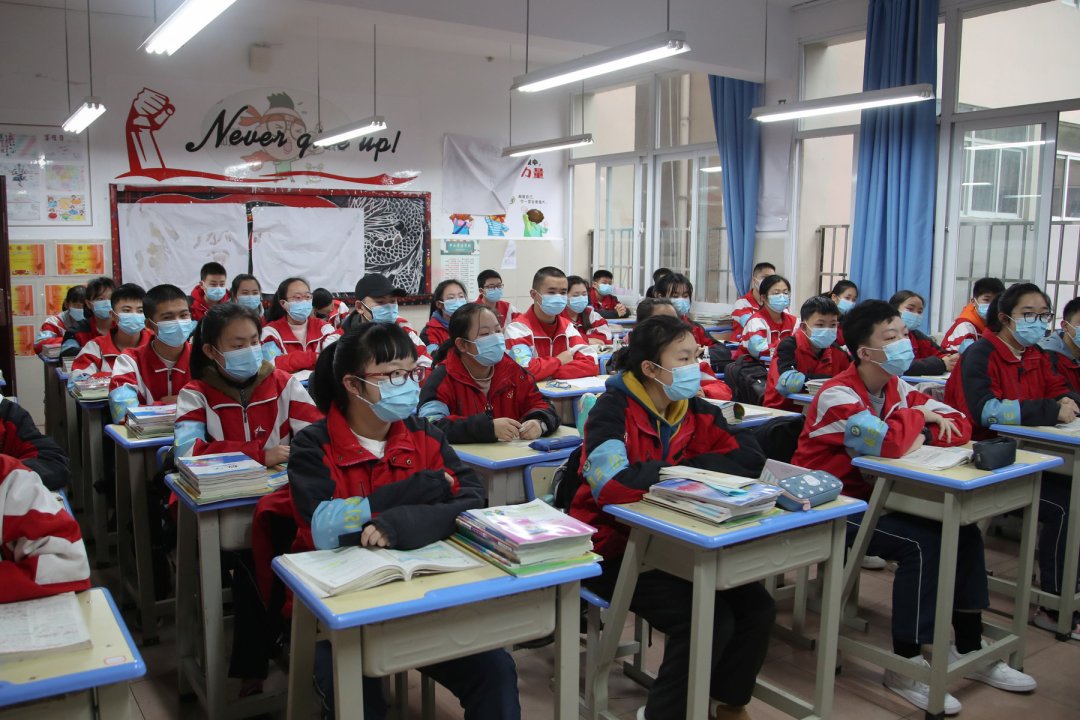
Many canadian provinces are planning to reopen school on a full time basis in September 2020. Here is a summary of their plans and how they should be implemented :
The following information is taken from CTV News
NEWFOUNDLAND AND LABRADOR
Newfoundland and Labrador’s back-to-school plan aims to return to full-time in-class attendance with the option of a return to remote learning or hybrid model if the COVID-19 risk increases.
Individual school districts will determine what scenarios work best for their schools and are responsible for configuring classrooms and other spaces to maintain physical distancing and developing protocols for hygiene and for isolating students who become ill.
The Education Department aims to limit classroom attendance to 50 per cent when the COVID-19 risk is considered low to moderate. Priority will be given to students in kindergarten through Grade 6, kids who have special needs, and for children of essential workers.
Students and staff will also be required to go over a COVID-19 exposure and symptom checklist before entering a school.
It’s good that each individual school district determines what scenario works best as many areas have not been affected by the virus.
The difficult part is the configuration of classrooms.
Prioritizing younger students is a good step and limiting school populations to 50 % will help the teachers in controlling social distancing.
A missing step is the training for staff and students.
PRINCE EDWARD ISLAND
Full-time classes will also resume in P.E.I., where staff will receive training on how to maintain health and safety protocols within classrooms to mitigate infections.
Parents are being encouraged to drive their kids to and from school to reduce the number of passengers on school buses. Drop-off and pickup times, as well as lunch breaks and recess will also be staggered to avoid crowding.
When available, class sizes will be reduced in order to accommodate distancing and students will work in cohorts or bubbles.
A good incentive in the training of staff.
Staggering the arrival and the timetable of different cohorts is going to help in reducing contact. I would add using different doors for each cohort.
The reduction of class sizes will be a great help for teachers to be able to circulate in their own classroom.
NOVA SCOTIA
All students in Nova Scotia will return to school in September with increased health and safety protocols. Classrooms will also be reorganized to increase spacing, and classes will be treated as a bubble, to minimize contact with other students.
In-school assemblies and other large gatherings will not be permitted. As well, cafeterias and school food programs will deliver food to students, and students will eat lunch at their desks.
High school students will be required to wear a mask in school spaces where social distancing is not possible, such as in hallways and common areas. Masks will not be mandatory in class.
Cohorts or bubbles seam like a good solution but we’ll have to see how it will be implemented. The school system is usually slow to change.
Removing access to microwaves is a good move.
Not having masks in class is a very high risk. Teachers will be wearing IPEs but that will be more to protect the students than themselves. Training will have to be given on how to remove their IPE.
NEW BRUNSWICK
In New Brunswick, full-time learning will be mandatory, but will look different depending on a student’s grade level.
Students from kindergarten to Grade 8 will attend school full-time in groups of up to 15. Those groups will attend class, socialize and enter the school together, maintaining distance from other groups.
High school students will be required to attend class a minimum of every other day, with reduced class sizes. The province is also providing financial support for students to purchase their own laptops to bring to class.
It is not a good sign when it is MANDATORY and not giving parents the choice.
They say mandatory but they will be by groups of 15 which will demand double the space and teachers. See link in text for more info.
Alternating class days for high school should minimize the risks.
QUEBEC
With full-time classes set to resume in September, Quebec’s plan includes dividing classes up to Grade 9 into “bubble groups” of up to six students who will not have to physically distance from each other.
These bubble groups will have to maintain a two-metre distance from other students and staff whenever possible. Teachers will move between classrooms based on the subject being taught, and students will remain in the same classroom.
Students in Grades 10 and 11 can chose to either form their own bubble and attend school full-time or use an alternating schedule, attending school at least every second day with the same class of students, while participating in at-home learning.
It’s not yet clear whether entire “bubbles” of students would be sent home if one becomes sick, or if someone in the family of one of the students is sick.
They are going into smaller bubble groups within the cohort. This will limit even more contact between students.
Having staff be in contact with more students is not helping the situation.
The high school solution is too risky leaving the choice to the students.
ONTARIO
The Ontario government announced on July 30 that elementary school students and many high school students will return to the classroom full-time in September.
Elementary students will return to class five days a week for full days, which will include recess and lunch. Class sizes will not be restricted.
Students will see changes in the times for recess, lunch, and bathroom breaks, however.
While most high schools will reopen under the same stipulations, 24 school boards across the province will have classes capped at 15 students and will alternate days or schedules to ensure schools remain at 50 per cent capacity.
Non-medical masks will be mandatory for students from Grade 4 to Grade 12. Grade 3 students will be encouraged to wear a mask in common areas, though it is not required.
Teachers and school staff will be given medical masks.
Parents will be asked to self-screen students each day and to keep a child at home if they are experiencing any symptoms.
Not restricting class sizes is a mistake because kindergarden classes have up to 30 students plus two adults. Also the kids won’t be wearing masks and have a tendency to play very close together.
Staggering lunches, recesses and bathroom breaks are a good step.
Some French school boards overlap English school boards that are not part of the list and vice versa. But reducing capacity will help.
Mandatory masks is a good move. Staff and students will be trained. See link.
Self-screening does not work because often students were sent to school even if they have the flu.
MANITOBA
The Manitoba government announced on July 30 that elementary school students will be heading back to school full-time on Sept. 8, while high school students may be required to conduct online classes, depending on each school’s ability to implement the necessary physical distancing regulations.
Each school must ensure students working remotely have access to the necessary technology.
Classrooms will be configured to support physical distancing, including the use of multi-purpose rooms, if needed. Where physical distancing requirements can’t be met, students will be placed in cohorts.
Lunch breaks and recesses will be staggered and protocols will be implemented to reduce congestion in the hallways and common areas.
Masks will not be mandatory, but students and staff will be asked to self-screen and stay home if they are showing any symptoms.
Again, reducing the number of students in high school is a good way to manage the pandemic.
Configuring classrooms into rows once again should help . The newer models in the past years were group learning at round tables.
Not having mandatoy masks is elevating the risk of transmission.
SASKATCHEWAN
In June, Saskatchewan announced that in-classroom learning will resume in the fall, releasing a set of guidelines to help school divisions prepare. But the bulk of the planning will fall to school divisions and school boards.
The Saskatchewan Education Response Planning Team is currently in the process of reviewing draft plans developed by school divisions. The ministry expects to provide the divisions with feedback on their submitted plans before the end of July. Divisions will then share their return-to class plan with their local school communities.
According to the provincial guidelines, staff, parents and students are encouraged to limit physical contact, but the note that physical distancing is “less practical” for younger students. Although the province says general use containers need to be available, students and staff are encouraged have their own hand sanitizer on hand.
Regina Public Schools said it’s looking at protective screens, water bottle fillers and even air purifying systems for the upcoming school year, but note that distribution of these items will be tied to school enrolment and staff numbers.
Again, having school divisions decide is better because they can adapt according to the number of cases in each city.
Bringing your own sanitizer should also help.
Air purifying filters is another good step to have in spaces with big crowds.
ALBERTA
Students in Alberta will head back to the classroom with full-time schedules in September, with a number of new health measures in place, including grouping students in cohorts to limit contact, staggering start times for classes, recesses and lunches, and daily COVID-19 screening questionnaires. Class sizes, however, will not be limited.
Should an outbreak of COVID-19 occur, affected schools could move to partial in-class learning or at-home learning.
Education Minister Adriana LaGrange said parents won’t be forced to send their kids to school if they don’t feel it’s safe. However, it would be up to the parents to work with the school to develop a plan for their child’s at-home learning.
Cohorting will help but not limiting the amount of students per class will still be putting staff at a higher risk.
A good move is not forcing parents to put their children into school.
They also seem to have a plan if an outbreak occurs.
BRITISH COLUMBIA
On July 29, the B.C. government announced that “most students” will return to school for full-time in-person classes on Sept. 8.
As part of the upcoming school year, students will be divided into “learning groups” of 60 students for elementary-aged children and groups of 120 for high school students.
These groups are not the class sizes, but rather the size of the groups students can interact with, which the government says will reduce the risk of transmission among students, while improving contact tracing in the event of an outbreak.
Groups of 60 is way too big for interacting. It makes it difficult to trace contacts if a break out occurs.
The bigger the groups also means that all of these students will have to stay home during an outbreak.
TERRITORIES
In Nunavut, schools will reopen in September with few changes, provided the territory continues to be free of COVID-19.
In the Northwest Territories, school is set to resume but students and staff will undergo daily COVID-19 screening and maintain physical distance with the help of new classroom configurations. The territory has also mandated staggered recess periods and that students wear masks when on busses.
In Yukon, each school will be responsible for adjusting operations to meet provincial guidelines, including physical distancing and reduced class sizes. School officials are expected to share reopening details with the government before September.
In Nunavut, it is pretty safe to open the schools with few modifications
In the Northwest Territories, daily testing of staff and students might be tiresome for everyone. Staggering the timetable will sure help.
Yukon, is also quite isolated so every school can manage their own guidelines.
All of this preparation from the provinces and teritories will probably still mean that the schools will close by the month of November. People are starting to relax and the next wave will probably peak in November.

 School Solutions